Review: FLORAL BORDER – 29 Designs for Embroidery
As a designer who spends more time looking at stitch density and fabric grain than scrolling through social media feeds, I have developed a certain skepticism when it comes to new graphics and illustrations. We are all bombarded with digital assets that look beautiful on a screen but fall apart under the needle. That is why I treat every new embroidery file as a potential client project before I ever commit it to a final product. Recently, I put FLORAL BORDER – 29 Designs through its paces to see if it holds up in real-world applications, from custom apparel to delicate baby items.
The First Impression: Mood and Visual Personality
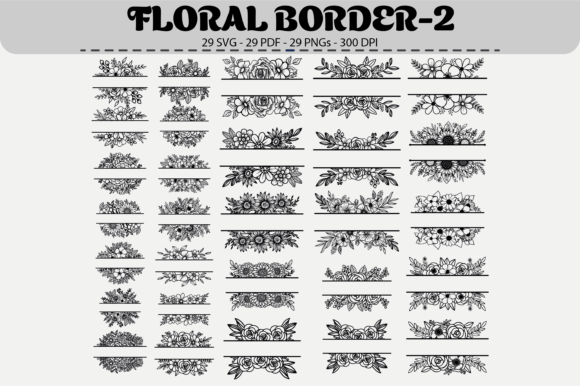
When you first open the package of FLORAL BORDER – 29 Designs, the immediate takeaway is one of structured elegance. Unlike chaotic, free-form floral patterns that can feel messy or overwhelming when stitched, these designs possess a clean, deliberate geometry. The prompt mentions they are designed in a "clean black," which suggests a high-contrast foundation that is crucial for embroidery clarity. In my experience, borders that rely too heavily on subtle gradients often lose their definition during stitching, but a strong, clean line work tends to translate beautifully into thread.
The mood here is versatile. It is not overly romantic or vintage, nor is it starkly modern. Instead, it strikes a balance that feels appropriate for a wide range of handmade products. Whether you are creating a boutique brand identity or a personalized gift, these design assets offer a professional polish that elevates the perceived value of the finished item. For an Etsy seller or small shop product creator, this versatility is a significant advantage, allowing you to use the same design family across different categories without breaking your visual consistency.
Real-World Application: The Custom Tote Bag Scenario
To truly test the utility of FLORAL BORDER – 29 Designs, I imagined a specific scenario: preparing a batch of custom embroidered tote bags for a local craft fair. These bags needed to be durable, stylish, and visually striking from a distance. A border design is often the perfect solution for tote bags because it frames the canvas without overwhelming the center space where a logo or name might go.
I considered how the machine embroidery design would interact with the heavy cotton duck canvas typically used for totes. Borders require careful attention to stitch density. If the design is too dense, the fabric can pucker; if it is too sparse, the backing may show through. Based on the clean nature of the illustrations, I anticipate that these designs will lay flat and maintain their shape well. The repetitive nature of a border also allows for efficient hooping strategies, which is a major time-saver for anyone running a craft business.
Furthermore, the finished product needs to withstand frequent washing. Tote bags are utilitarian items. A border that uses satin stitch for outlines and fill stitch for internal details must be robust. While I cannot confirm the exact technical specifications without seeing the raw file, the visual promise of FLORAL BORDER – 29 Designs suggests it is built with the structural integrity required for daily-use items. Customers trust a brand that presents neat, consistent edges, and this design supports that level of professionalism.
Performance Across Different Project Types
Beyond totes, the flexibility of having 29 distinct variations within this set is remarkable. Here is how I envision these digital embroidery files performing in other common embroidery projects:
- Custom Apparel and Sweatshirts: A floral border along the hem or cuffs of a sweatshirt adds a touch of luxury without being loud. This is particularly effective for sweatshirt embroidery aimed at teens or young adults who appreciate subtle branding. The clean lines will contrast nicely against fleece or jersey fabrics.
- Baby Clothes and Nursery Decor: When applied to baby onesies or crib bumper pads, the soft, organic shapes of the flowers can create a soothing aesthetic. However, caution is advised here. For baby embroidery, simplicity is key. You want to avoid excessive bulk near the skin. Testing these designs on scrap fabric is essential to ensure the thread colors are gentle and the texture is comfortable.
- Holiday Gifts and Kitchen Towels: Tea towels are a staple for holiday gifting. A border design works perfectly here, framing a central monogram or seasonal motif. The printable mockup potential for these designs is high, allowing sellers to showcase them in lifestyle settings before production begins.
- Embroidered Patches: If you produce embroidered patches for jackets or bags, the border elements can be adapted to frame a central icon. The clean black style mentioned in the description likely translates well to patch work, providing a sharp outline that defines the shape.
Where to Exercise Caution
No design is universal, and FLORAL BORDER – 29 Designs has specific constraints that every embroidery designer should respect. There are several situations where this design might struggle:
- Small Hoop Sizes: If you attempt to stitch these borders in very small hoops (under 4x4 inches), the intricate details of the flowers may become indistinguishable. Tiny stitches tend to merge together, resulting in a muddy appearance rather than crisp botanical shapes.
- Textured and Stretchy Fabrics: While borders generally perform well on stable fabrics, applying them to highly textured materials like terry cloth or stretchy knits requires advanced stabilizer techniques. Without proper support, the running stitch or satin stitch may distort, causing the border to wavy or uneven.
- Dense Stitch Areas: Be mindful of areas where multiple layers of thread overlap. High stitch density can make the fabric stiff and uncomfortable, particularly on custom apparel worn against the skin. Always inspect the design map to identify potential hotspots.
- Curved Surfaces: Applying a straight border design to curved surfaces, such as the front panel of a cap, can be challenging. The design may need digitizing adjustments to accommodate the curve, otherwise, it may look distorted on the final finished product.
Practical Designer Notes for Implementation
If you decide to incorporate FLORAL BORDER – 29 Designs into your workflow, I recommend following a strict testing protocol. Never assume a digital asset will print or stitch exactly as displayed on your monitor.
First, always test the design on scrap fabric that matches the weight and texture of your final material. This allows you to assess how the stabilizer interacts with the fabric and whether the tension settings on your machine need adjustment. Second, review the thread colors carefully. Since the source illustrations are described as "clean black," you will need to choose thread colors that provide sufficient contrast against your chosen fabric. On dark fabrics, light threads will pop, while on light fabrics, darker threads will define the shape.
Additionally, check the licensing terms thoroughly. As a commercial embroidery artist, you must know whether you are permitted to sell finished items made with these designs. Some digital product sellers restrict commercial use, while others allow it with attribution. Confirming these details protects your brand consistency and legal standing.
Finally, consider the emotional impact of the design on your customer. A well-executed floral border conveys care, attention to detail, and quality. In a market saturated with mass-produced goods, the human touch of personalized gifts and handmade products stands out. By choosing a design like FLORAL BORDER – 29 Designs that offers both beauty and structural clarity, you are investing in the perception of your entire brand.
In conclusion, this set appears to be a valuable addition to any graphics library focused on botanical themes. It offers the reliability needed for professional work while retaining enough artistic flair to engage customers. Just remember to respect the limitations of the medium, test rigorously, and let the quality of the execution speak for itself.